2025
DeVite
1st place design in DePaul User Experience Association and Design Club at Depaul's Designathon
A mobile app designed to help DePaul College of Computing and Digital Media (CDM) students discover on-campus organizations and activities. Designed in just a day,
Role
Timeline
~6 hours
Skills
User Research
Mobile Design
Prototyping
Tools
Figma
Whiteboards
Figjam
Team and context
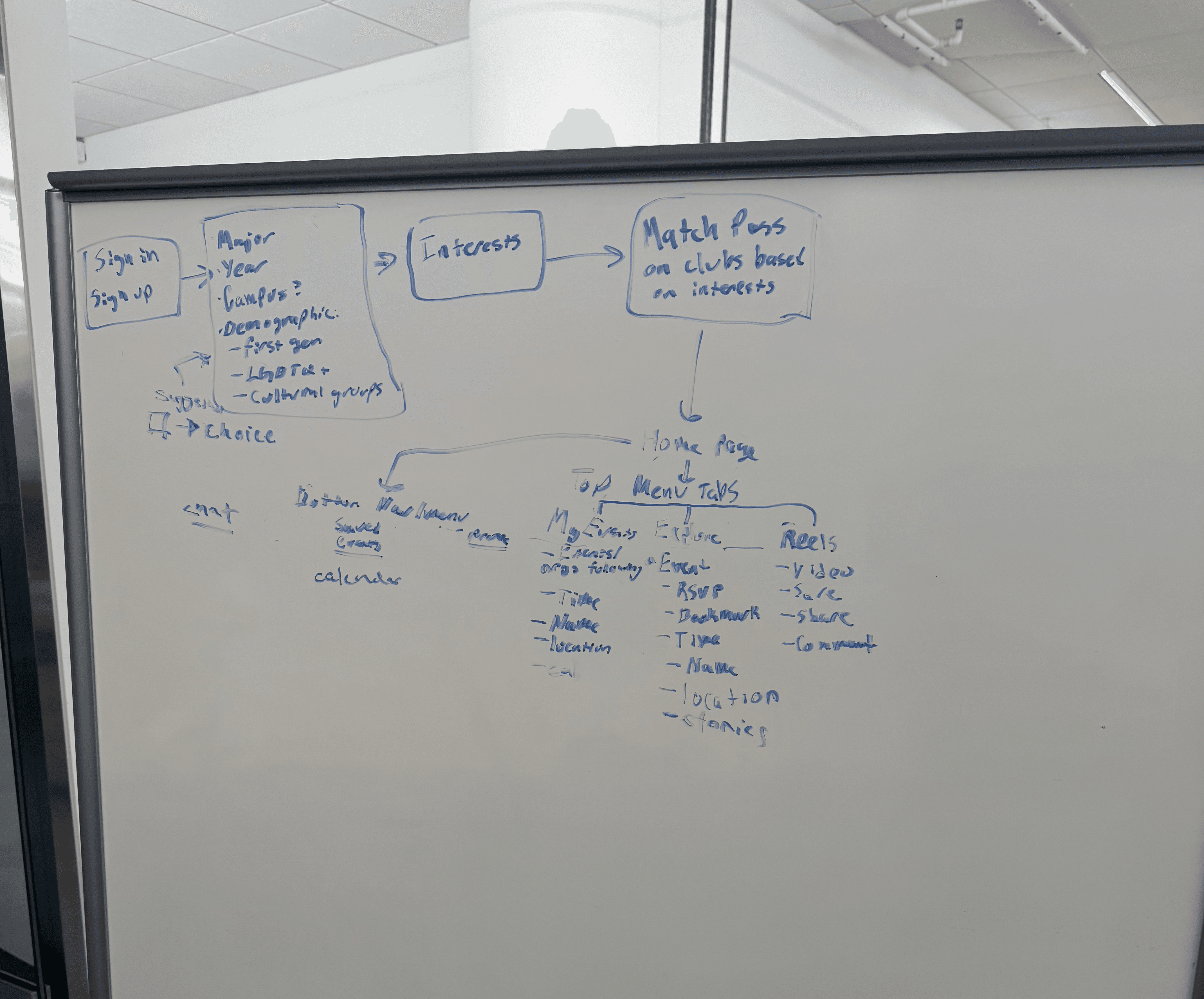
Working with 3 other student designers (1 MS HCI student and 2 undergraduate UX Design students), we had 6 hours to research, ideate, design, and present. During this process, we had mentors and judges that gave invaluable advice and guidance. I was responsible for analyzing the given research, conducting interviews with available students, drafting user flows, and designing the onboarding process.

Problem
30% of students don't participate in extracurriculars. This isn't from disinterest, but from infrastructure barriers.
The provided research identified three compounding barriers: events are poorly timed, locations are inconvenient, and the existing platform (DeHub) is overwhelming, impersonal, and unintuitive. Students who do engage rely on word of mouth and struggle with commitment and retention. There's no centralized, personalized way to find what's relevant to them.
Brief
"Design a platform to help DePaul CDM students engage with campus-life and extracurriculars"
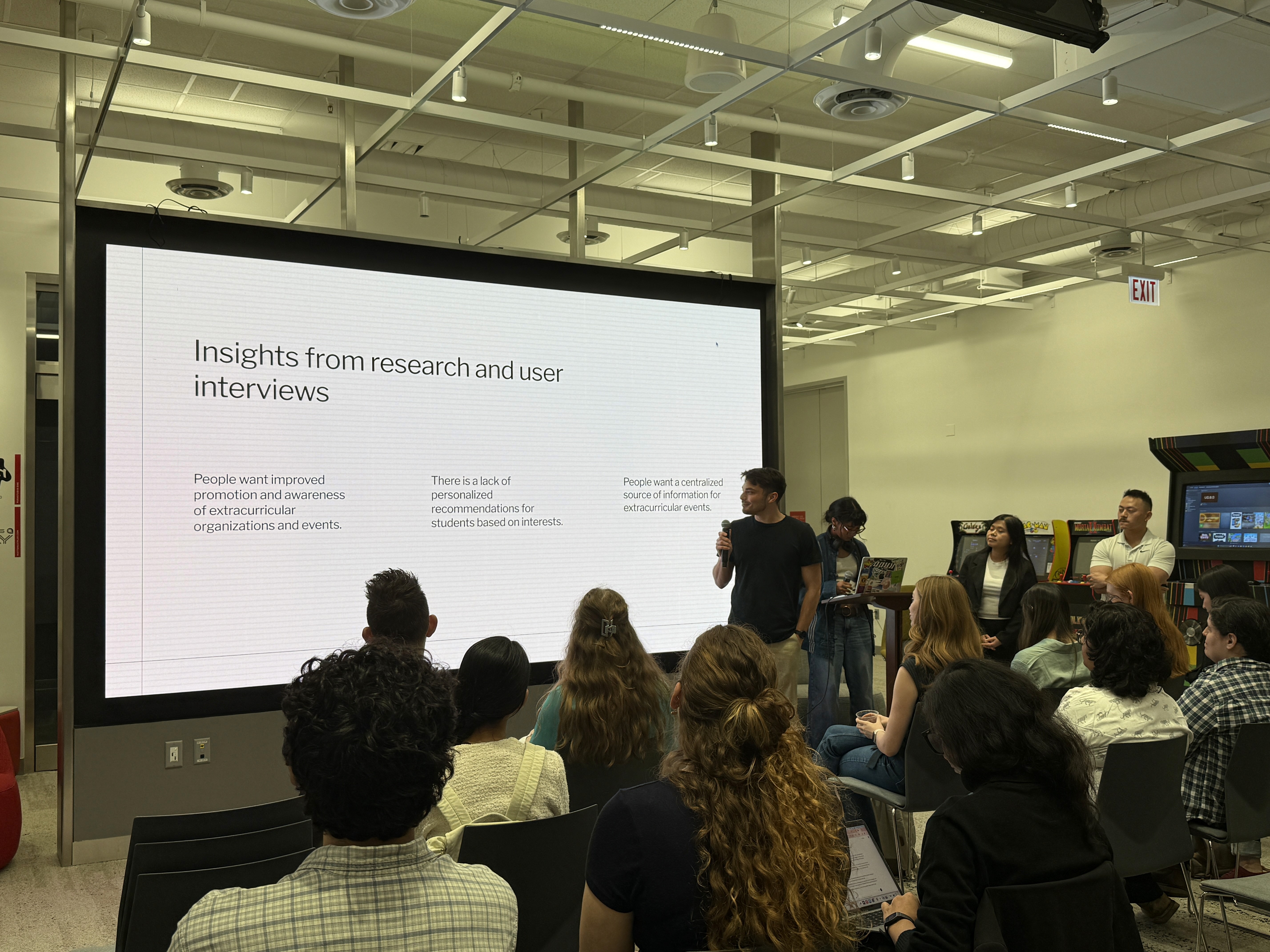
Research Findings
30% of students don't do extracurriculars, leading to a lack of belonging
Timing, location, and poor promotion are key barriers that lead to decreased retention
The current platform, is overwhelming and impersonal
Students want a centralized platform to discover extracurriculars and gather meaningful meeting information
Graphics played a role in student interest and gauging the "vibe" of the organization
Key Decisions and screens
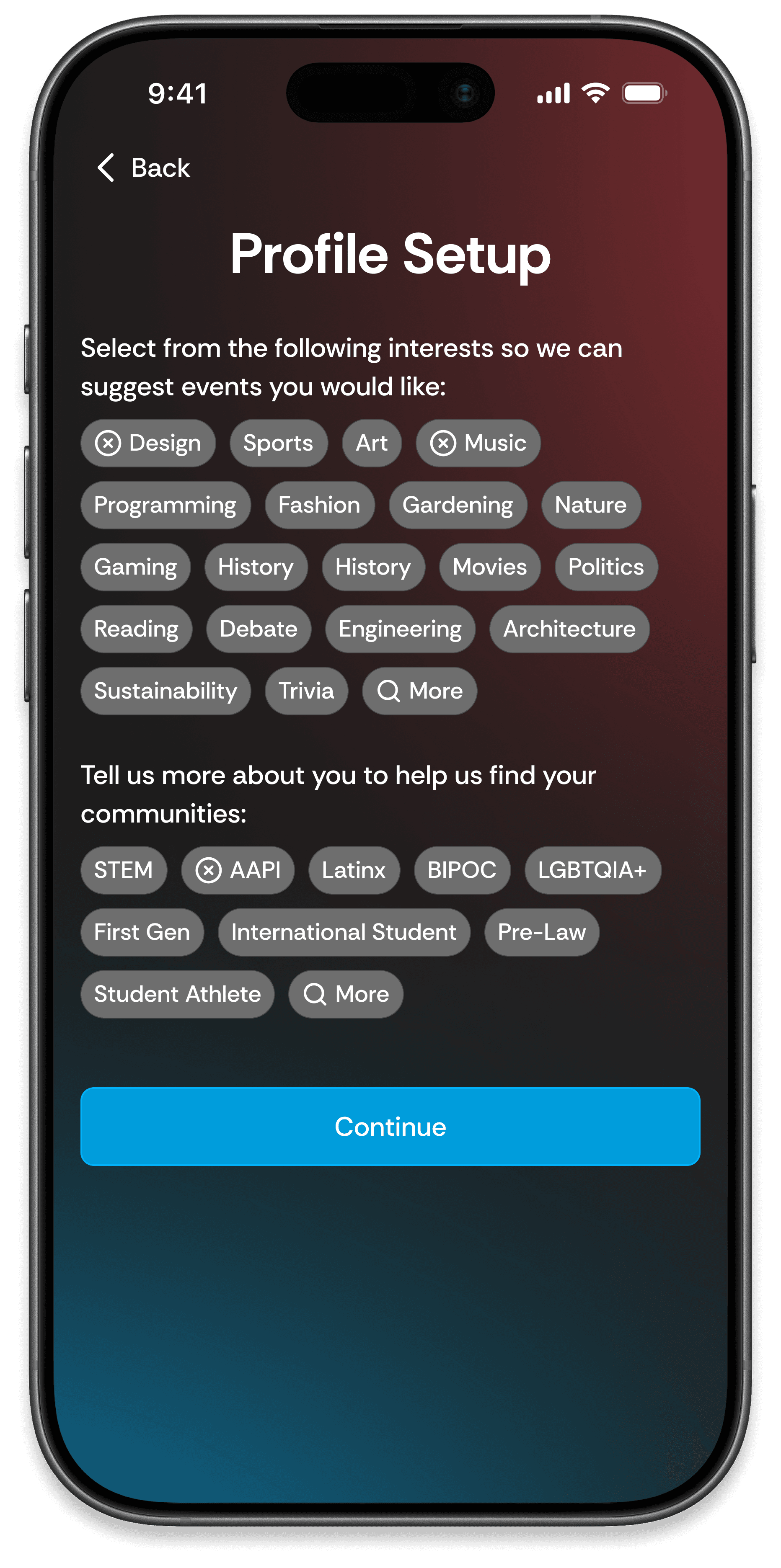
Designing the Onboarding Flow
We each focused on a specific function, mine being the onboarding process. I tried to focus on more modern, familiar design patterns and interactions to appeal to the tech-adept audience that makes up the College of Computing and Digital Media.
Interest-based Personalization
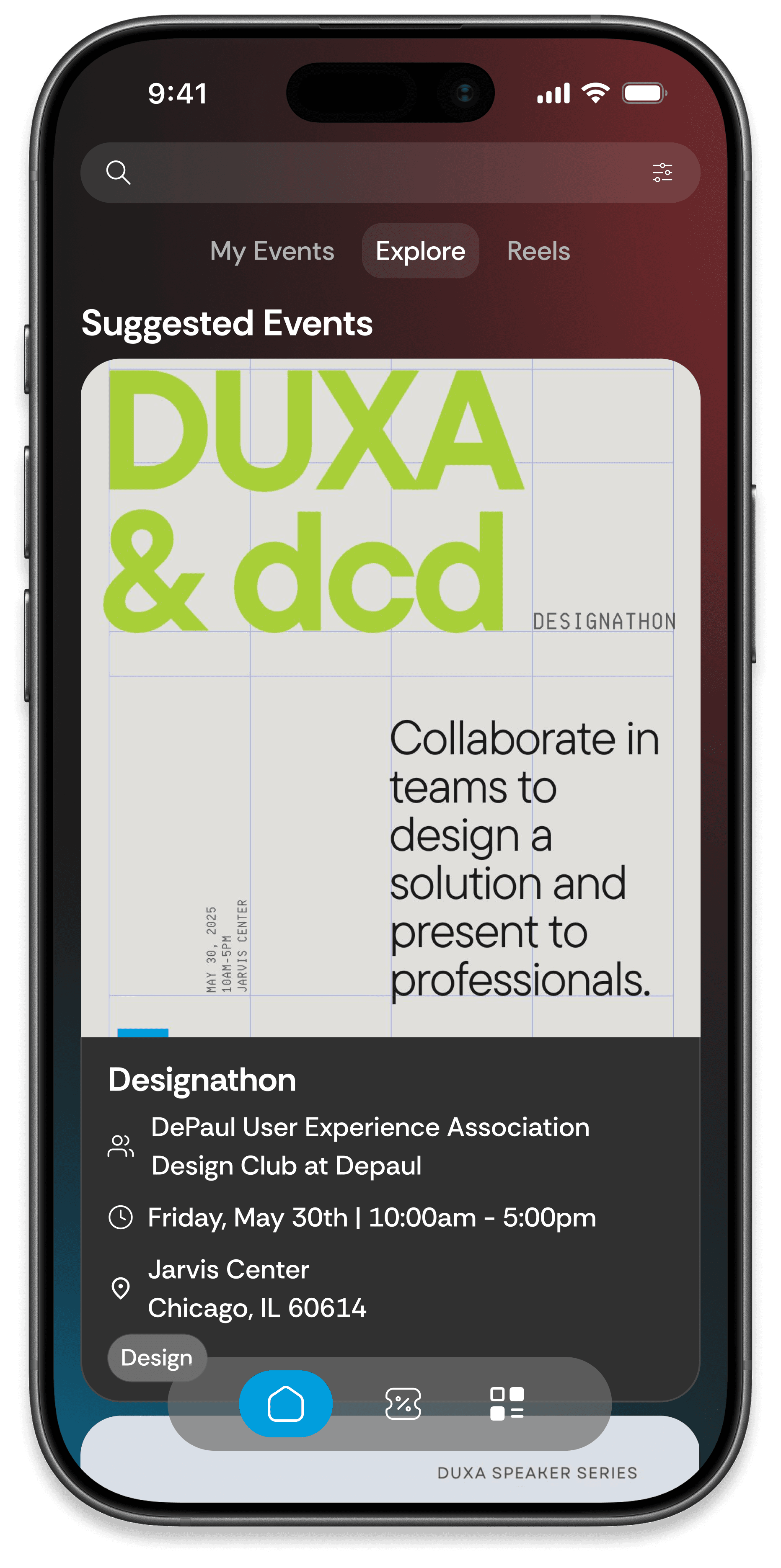
DeHub's core failure was surfacing everything to everyone. A generic home feed would replicate the same problem. The onboarding process collects both interest categories and identity communities to make relevant content visible.
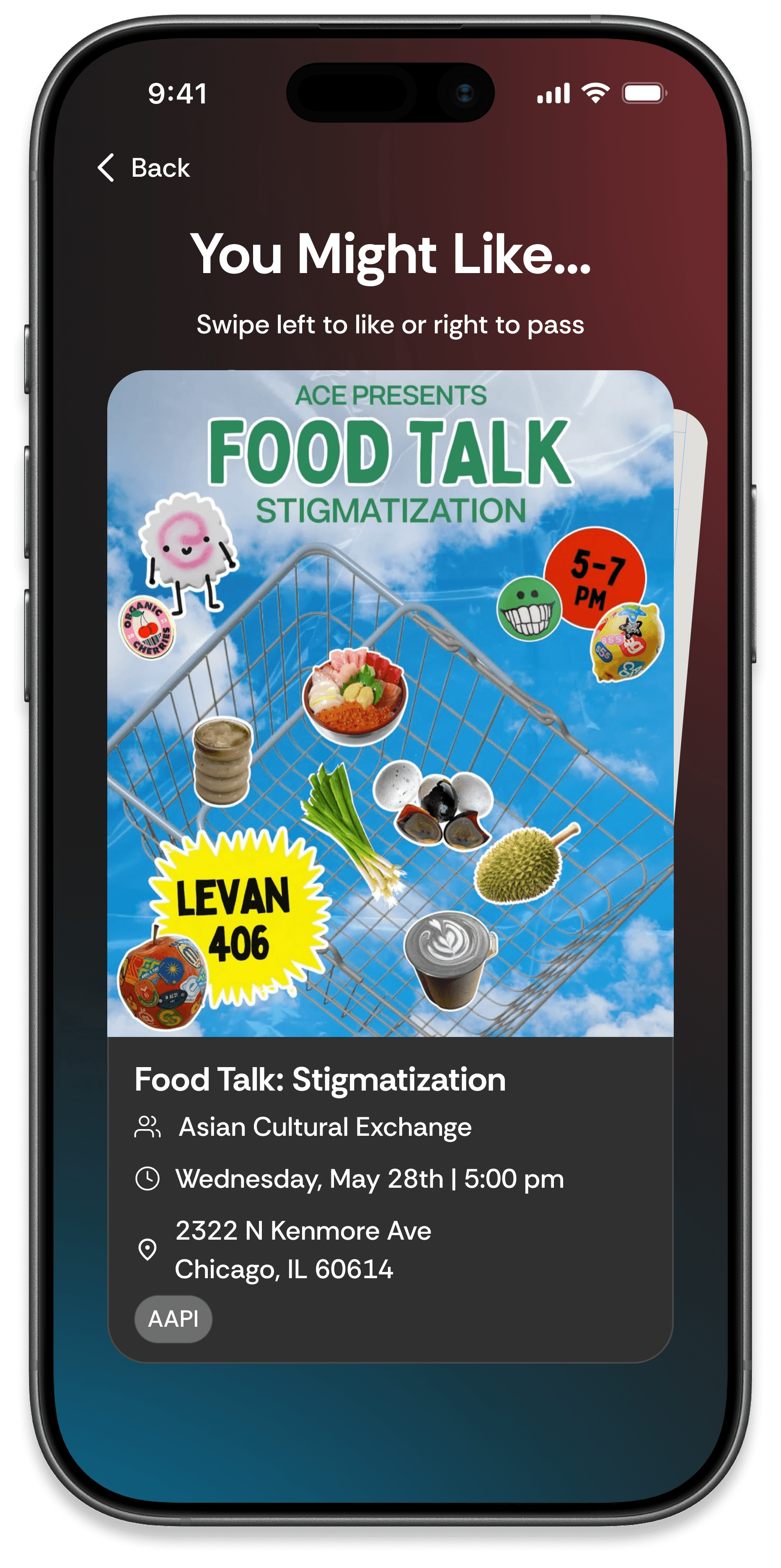
Swipeable Card Deck
I implemented a familiar design pattern to further gauge the user's interest in upcoming extracurricular events, following their selection of interests and communities. The swipe pattern keeps the interaction lightweight and exploratory rather than committing.
Visual Promotion as a Design Input
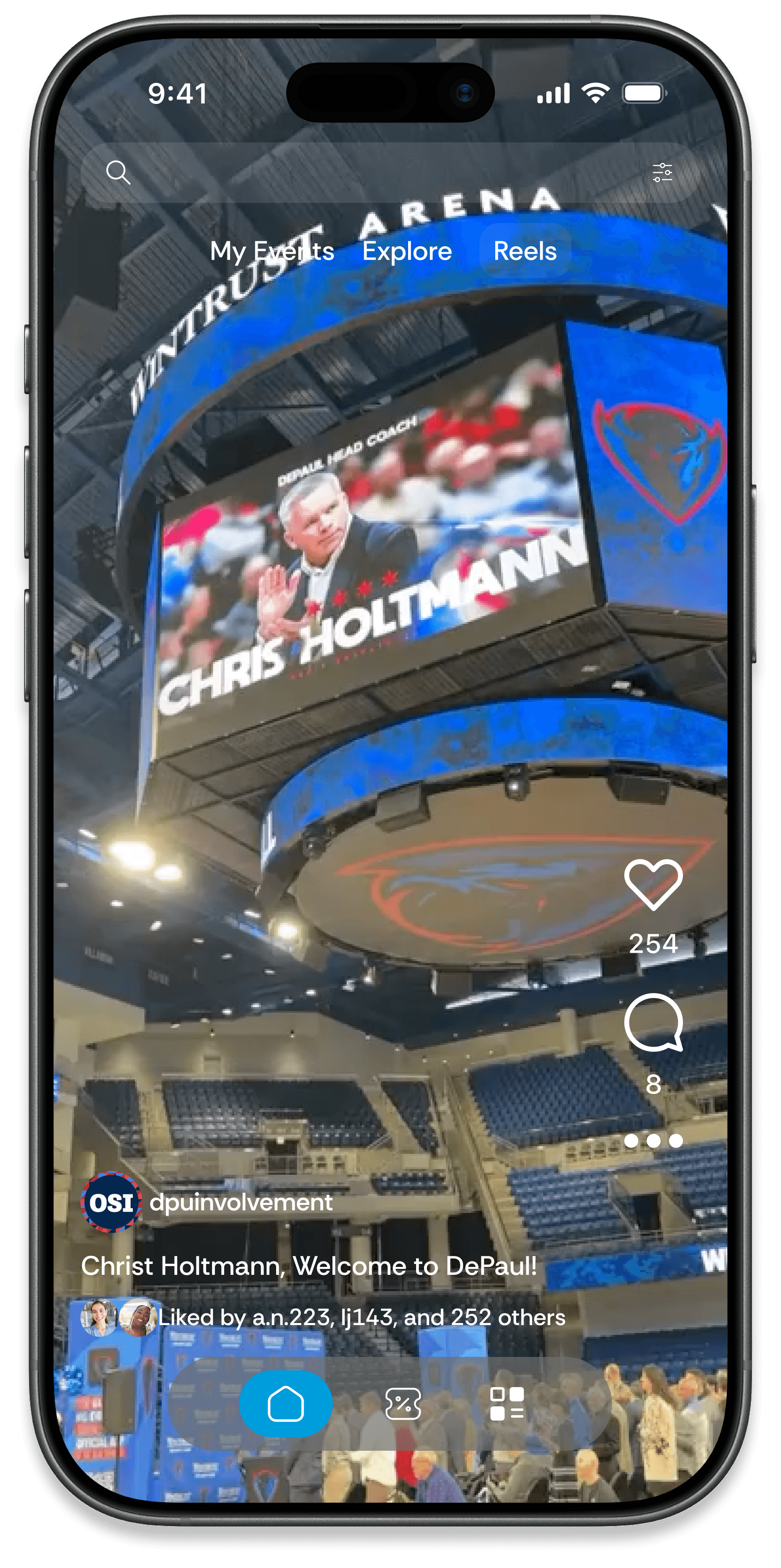
The research suggested that poor promotion was a barrier for extracurricular participation, and a student revealed that graphics and the design of flyers served a secondary purpose of conveying the vibe or message of an organization. I contributed ideas for incorporating visual elements, such as flyer-based cards and short videos so clubs can both promote events and project the energy of their communities.
Outcome
A framework for student-centered extracurricular discovery
Over 6 hours, I conducted research and designed an experience that improves upon the existing student engagement platform by providing interest-based suggestions and visually rich promotional material, adopting familiar design patterns for a student audience, and surfacing important information to increase awareness of extracurriculars and communities. We won 1st place among 9 competing teams, collaborating effectively with new teammates under a strict timeframe.
Constraints
Due to the time constraints, we did not have time to test our design and iterate. We also had limited time for research, and heavily depended on the provided research and available interview data. Thus, our design was built around three measurable hypotheses:
Personalization → registration rate
Does interest-based onboarding increase event attendance compared to DeHub's generic feed?
Increased Promotion → retention rate
Does surfacing important meeting information increase retention rates for students' participation in extracurriculars?
Reels → passive discovery
Do short-form videos surface communities students wouldn't have searched for?
What I learned
Constraints accelerate decisions
A 6-hour timeframe forced us to commit. We had to be confident in our user flow and concept before touching Figma, which encouraged meaningful conversations about the problem we were solving. The decisions that held up best under time pressure were the ones grounded in a single, specific user behavior instead of a generalized need.
What's next
Closing the retention loop and enhancing community discovery
We primarily focused on creating a more personal experience for students to discover extracurricular events. However, with more time, considering the retention problem and what makes students stay in a club or org would make this platform more robust. DeVite is discovery-first, but the next iteration would close the loop between finding, attending, and staying.